
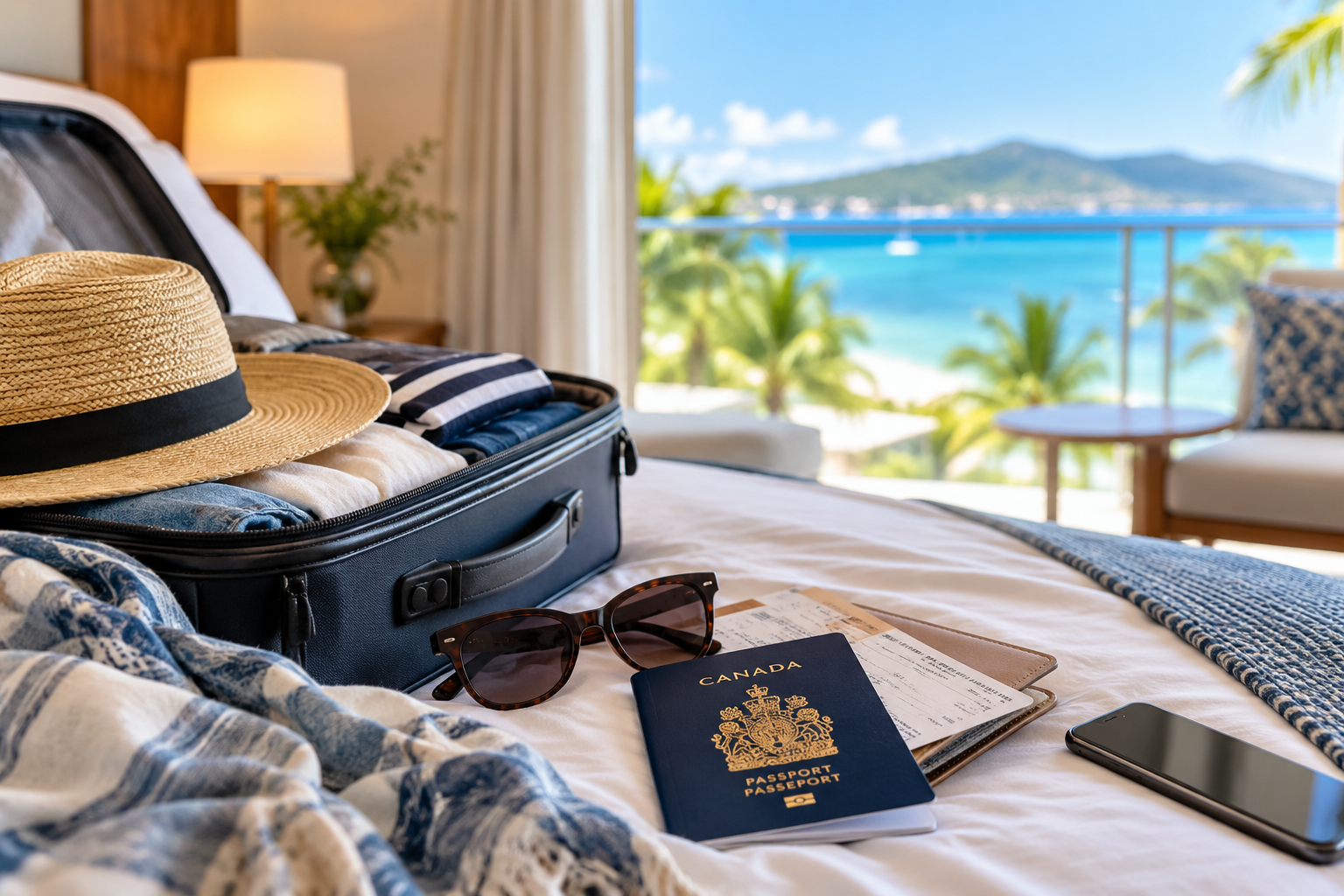
You booked the flights.
You found the hotel.
You made the reservations.
You've been looking forward to this trip for months.
Maybe you've even paid for most of it already.
And then life happens.
What if you get sick before you leave?
What if an unexpected situation means you have to cancel your trip?
What if you become ill or injured after you've arrived?
What if you're travelling in the United States and suddenly need medical attention?
What if you have to return home unexpectedly?
What if you've already started your vacation and something forces you to cut it short?
What if a flight disruption causes you to miss part of your trip?
What if your luggage doesn't arrive with you?
And what about that travel insurance you thought was included with your credit card?
Are you actually covered for what you think you're covered for?
Those are very different questions—and they're worth asking before you leave Canada.
You've been looking forward to your vacation for months.
Then, a few days before departure, you're too sick to travel.
Depending on the policy you've purchased and the circumstances, trip cancellation coverage may help reimburse eligible prepaid, non-refundable expenses when a covered reason prevents you from travelling.
But this is where the details matter.
Travel insurance isn't a blanket promise that any reason for cancelling will be covered. Policies have specific covered reasons, conditions, exclusions and requirements.
That's why it's important to understand the policy before you need to use it.
Cancellation and medical coverage aren't necessarily the same thing.
Trip cancellation coverage generally deals with circumstances that occur before you depart, while trip interruption coverage applies when an unforeseen covered event forces you to end or change your trip after you've already left.
That distinction is easy to overlook.
And if you've paid for flights, hotels, cruises, tours and other prepaid arrangements, the amount at stake can add up quickly.
This is where travel insurance becomes about much more than protecting the money you've spent on your vacation.
Your provincial health plan doesn't necessarily cover the full cost of medical care outside Canada. Government guidance specifically warns Canadian travellers that emergency medical and hospital costs abroad can exceed what their provincial plan would pay—and the traveller is responsible for the difference.
And the Government of Canada does not pay your hospital bills, medical evacuation or air ambulance costs if you become sick or injured abroad.
That's a very different risk from losing the cost of a hotel room.
This is one I think Canadians should take particularly seriously.
We are accustomed to Canada's health-care system, so it's easy to think:
"I'll just go to a hospital if something happens."
Of course you should seek medical care when you need it.
But the financial consequences can be very different outside Canada.
Even a short trip across the border doesn't eliminate the need to think about medical coverage. The Government of Canada's current travel guidance recommends purchasing travel health and trip interruption insurance when travelling outside Canada—even for a day in the United States.
And emergency care isn't the only potential consideration. Depending on the circumstances, a policy may also address things such as medical evacuation or repatriation.
This is why “I'll be fine” isn't really an insurance plan.
Imagine you're halfway through your vacation when something happens at home.
A family emergency.
A serious situation involving someone you love.
Suddenly, getting home becomes more important than finishing the vacation.
Trip interruption coverage is different from trip cancellation coverage because you're dealing with a trip that has already begun. Depending on the policy and the covered circumstances, it may help with eligible unused portions of the trip and certain additional expenses associated with returning home.
Again, the key words are “depending on the policy.”
The reason I'm emphasizing this throughout the article is simple:
Insurance coverage isn't one-size-fits-all.
This is another situation people may not think about when they're happily planning their vacation.
You've arrived.
You're enjoying yourself.
Then something unexpected happens.
You may have to leave early—or your plans may have to change significantly.
That's where understanding the difference between trip cancellation and trip interruption becomes important.
Before you travel, look at exactly what your policy says about interruption, including covered reasons, maximum benefits and documentation requirements. The Government of Canada recommends reviewing the terms, conditions, limitations, exclusions and requirements of your policy before leaving Canada.
This is another reason travel insurance shouldn't be viewed solely as “medical insurance.”
A significant travel disruption can have a domino effect.
A delayed flight could mean:
missed connection → missed transfer → missed cruise departure or tour → additional accommodation and transportation costs.
Whether those expenses are covered depends entirely on the policy and the circumstances.
And that's precisely why reading the details matters.
You've arrived.
Your suitcase hasn't.
And now you're standing at baggage claim watching everyone else collect their luggage.
Depending on the policy, travel insurance may provide benefits for certain baggage delays, loss or theft—but there can be limits, exclusions, documentation requirements and specific definitions of what qualifies.
It's another example of why “I have travel insurance” isn't the same thing as knowing what your travel insurance covers.
This is a really important question.
Some credit cards do provide travel-related insurance benefits. Canada's Office of Consumer Affairs specifically recommends checking whether your credit card provides medical, baggage or other insurance before purchasing additional coverage.
But here's the part that matters:
Don't assume. Check.
Look at the actual certificate of insurance for your particular card.
Ask:
Credit cards and their insurance benefits can differ considerably.
The fact that your card says “travel insurance included” doesn't tell you the whole story.
This may be the most important question of all.
An insurance policy is a contract. It specifies what risks are covered, under what circumstances benefits may be paid, and what limitations and exclusions apply.
That's why two policies can both advertise “travel insurance” and still provide very different protection.
Before you travel, consider looking at:
Coverage limits
How much will the policy pay?
Exclusions
What isn't covered?
Pre-existing medical conditions
Are there specific stability requirements or exclusions?
Deductibles
Will you have to pay part of a covered expense yourself?
Trip duration
Does your coverage last for the entire trip?
Eligibility requirements
Do you meet the policy's conditions?
Medical evacuation and repatriation
Are these included, and under what circumstances?
Cancellation and interruption
What events qualify?
These aren't the most exciting parts of planning a vacation.
But they can be among the most important.
The better question is:
That's a very different question.
Because travel insurance isn't simply about protecting the money you've spent on your vacation.
Sometimes, it's about protecting you.
And that's why it's worth having the conversation before you leave home—not when you're standing in a hospital, trying to figure out what happens next.
As a travel advisor, I can't tell you which policy is right for your individual circumstances, and no travel insurance policy covers every possible situation. But I can help you identify the questions you should be asking and make sure you're looking at the coverage that fits your trip and your needs.
Before you pack your suitcase, make sure you understand what you're taking with you.
Not just your passport.
Not just your credit card.
Your protection, too.
Travel insurance policies vary by provider, plan, traveller eligibility and individual circumstances. Coverage, exclusions, limits, medical stability requirements and claim conditions can differ. Always read the policy and certificate of insurance carefully and confirm coverage directly with the insurer before travelling.
 Charlene Joseph-Dunbar
Sign up for our newsletter to learn about the latest product news and deals. Also receive exclusive offers, contest details and giveaways.